Shelf & Display
Bookends for heavy books, and why the last pair failed
A row of heavy hardcovers defeats a short bookend for a reason that is geometry rather than quality. Here is what to buy, and three fixes that cost nothing at all.
By Scooter M. · Published · Last updated
How we are paid: the buy links on this page are affiliate links. If you buy through one, Amazon pays us a commission at no extra cost to you. It does not change what we rank or what we tell you to skip — the full disclosure is here.

| # | Gift | Material | Best for | Score | Price |
|---|---|---|---|---|---|
| 1 | 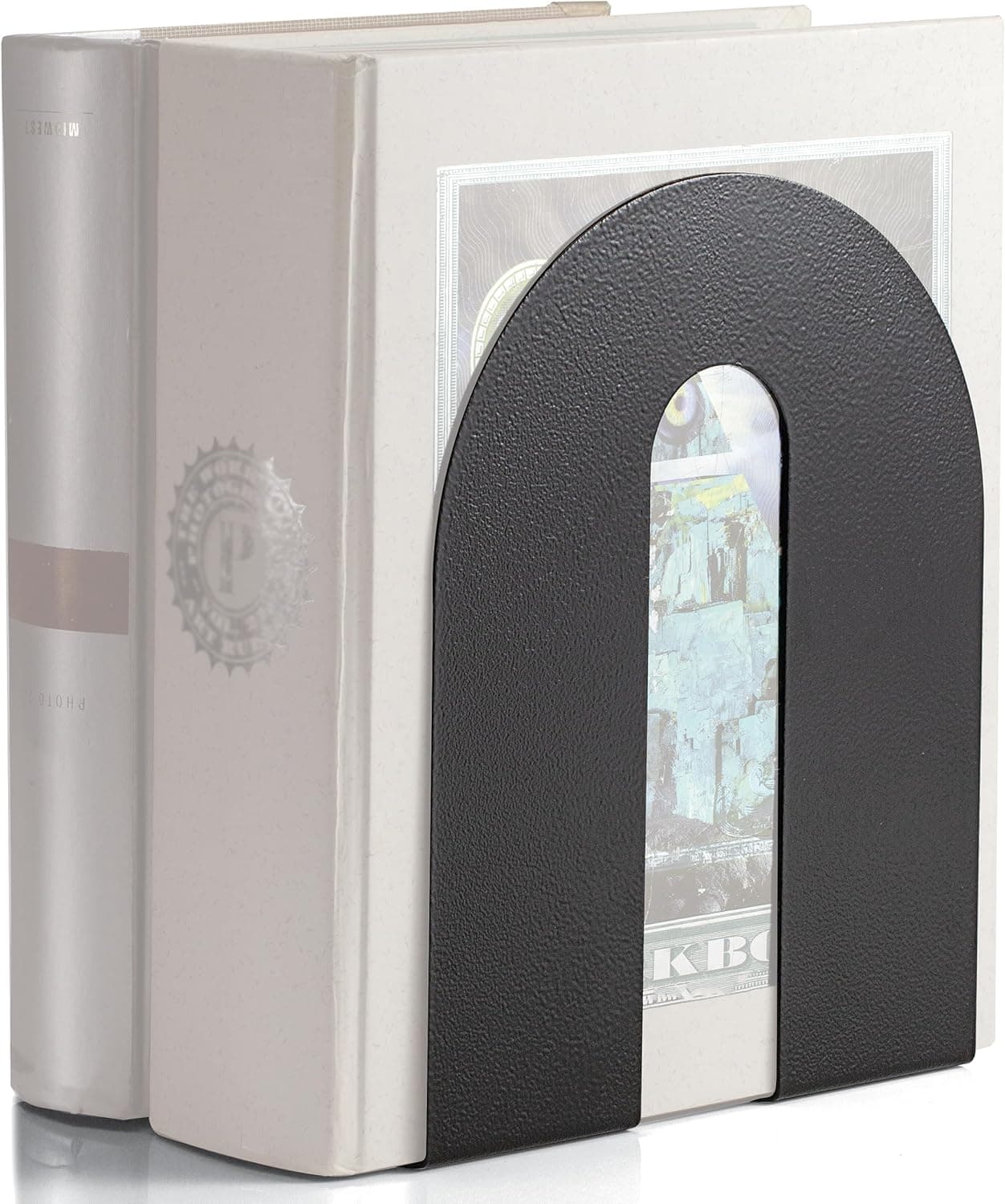 Officemate Heavy Weighted Bookends, 10 in Ten inches tall with a weighted base, from an office-supply brand rather than a marketplace seller — the tallest support here. | Weighted steel | Actually heavy books | 8.1 | Check price |
| 2 | 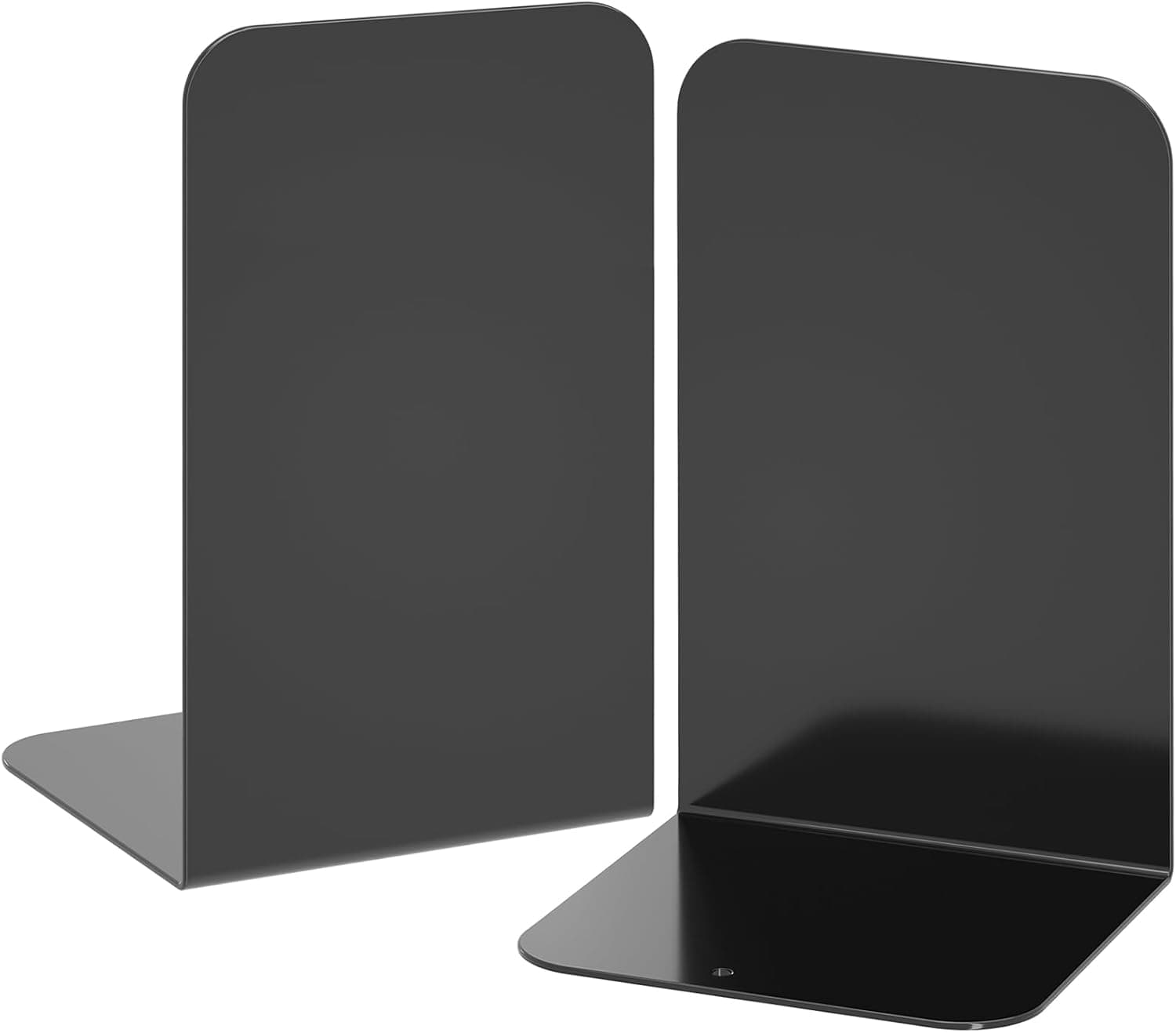 VFINE Metal Bookends, 8 in One pair of one-piece heavy-gauge steel at eight inches — taller than the seven-inch standard, without buying six of them. | Heavy gauge steel | One shelf, done properly | 7.8 | Check price |
| 3 | 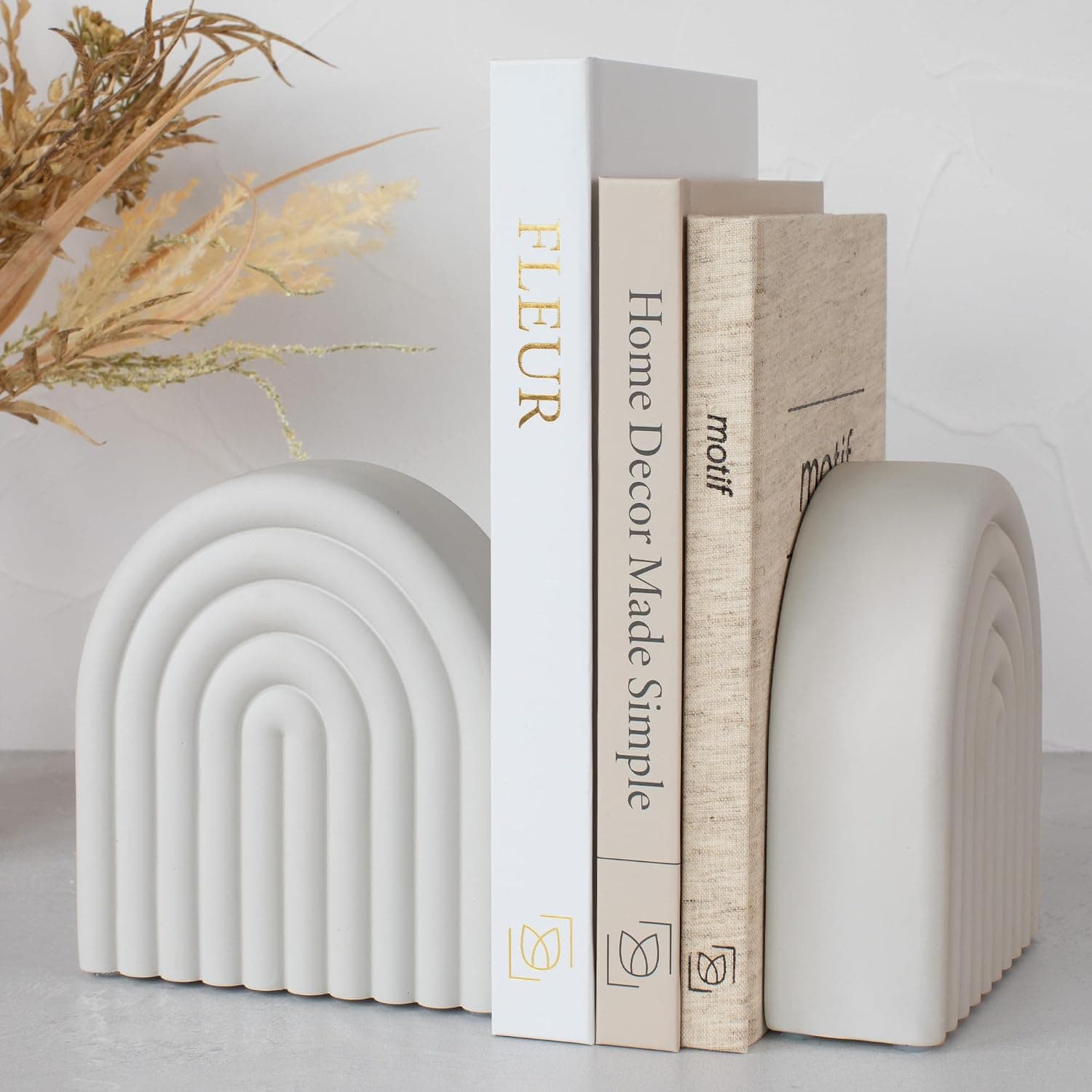 KIBAGA Concrete Bookends Cast concrete in a rainbow-arch shape, with published dimensions and the honest weight advantage of being made of concrete. | Concrete | A shelf people look at | 8.2 | Check price |
| 4 | 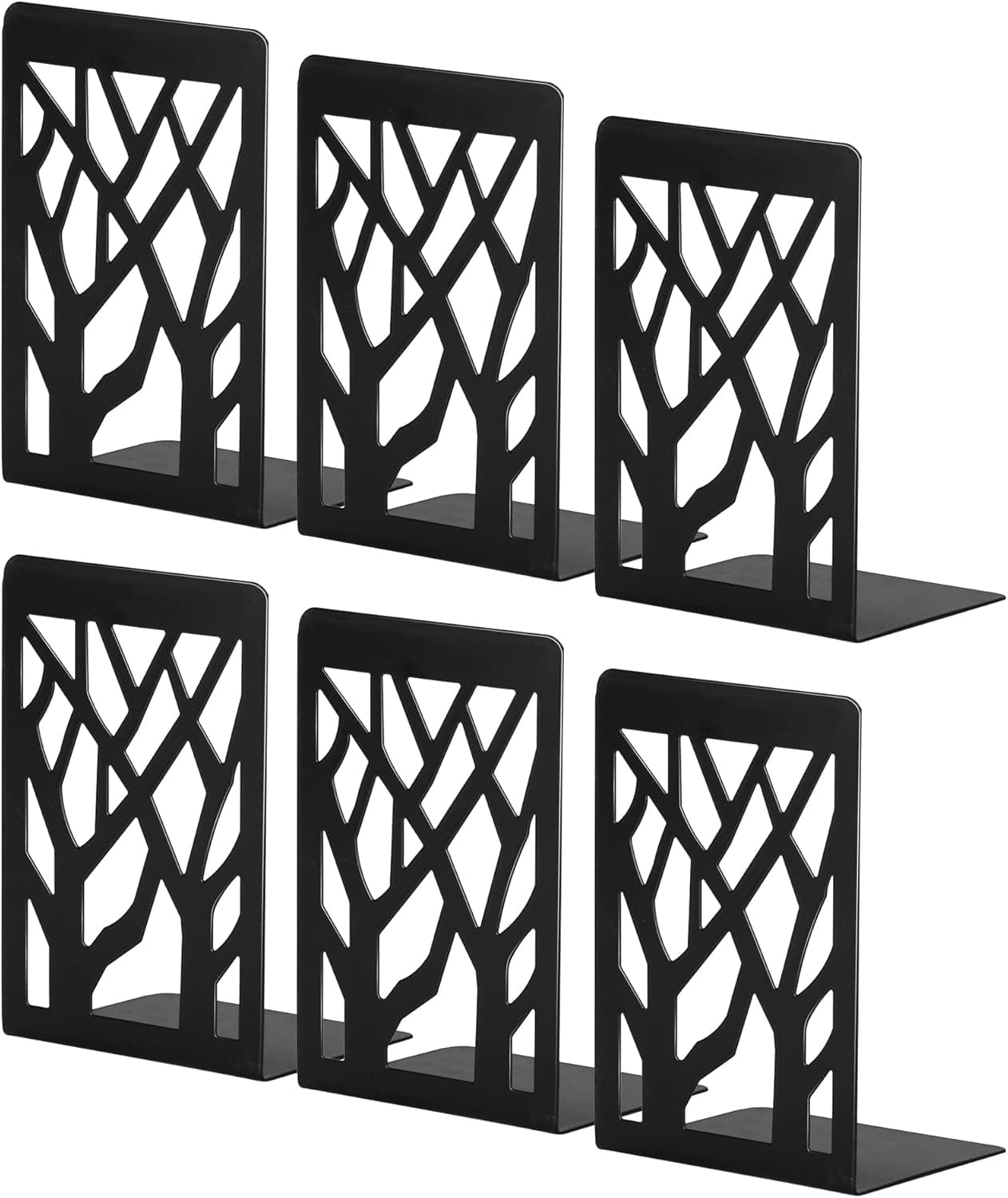 INNÔPLUS Metal Bookends, 3 Pairs Three pairs, seven inches tall, with published dimensions to the tenth of an inch and an anti-rust powder coat. | Powder-coated metal | Doing a whole bookcase | 7.8 | Check price |
Why the last pair failed
A leaning row of books pushes sideways at roughly the height of its own center of mass. A bookend resists that push at its base. The taller the row relative to the bookend, the more leverage the books have and the less the bookend's own weight matters.
This is why a small, genuinely heavy bookend still loses to a row of art books, and why buying a heavier version of the same short bookend usually does not fix it. The variable that changed the outcome was never mass; it was height.
The height rule
Three fixes that cost nothing
- Fill the shelf. A full shelf cannot lean. If a row can be pushed tight against the side of the bookcase and topped up with a few more books, the bookend problem disappears entirely. This is the fix nobody wants and it is the one that always works.
- Put the heaviest books at the ends. An oversized art book standing at the end of a row is a bookend that weighs four pounds and cost nothing. The lighter paperbacks lean against it rather than against a piece of steel.
- Lay the tallest ones flat. Oversized books are usually happier stacked horizontally anyway — it is better for their spines, and a stack of three large flat books at the end of a shelf holds the rest of the row up.
What to buy when the fixes are not available
The Officemate, at ten inches with a weighted base. It is the tallest support in our guide and the only listing that describes a weighted base as a design feature rather than reaching for the words heavy duty. It is also plain black office furniture, which is the trade.
The VFINE, at eight inches, one-piece. One-piece construction matters under real load: a bookend folded and welded from two pieces has a joint exactly where the force acts. Eight inches is the useful middle for a normal hardcover row.
The KIBAGA concrete, if the row is short. Heavy by material, short by design. It is the right answer for records and paperbacks and the wrong one for a foot of textbooks.
A note on records
Vinyl is twelve and a half inches tall and heavy, and it wants to be stored upright and tight. The concrete pair here is explicitly described by its seller as handling records, and at five and a half inches it does that by being heavy rather than tall. For a full shelf of records, the right answer is the same as for books: fill the shelf, and let the records support each other.
Every pick
All of them, in full
Each write-up shows the gift-fit score broken into its five parts, the specs the seller actually publishes, and who should give it a miss.
No. 1 — Actually heavy books
Officemate Heavy Weighted Bookends, 10 in
Ten inches tall with a weighted base, from an office-supply brand rather than a marketplace seller — the tallest support here.
| Spec disclosurecomputed | 17 / 20 |
|---|---|
| Gift readinessour call | 12 / 20 |
| Works for any readerour call | 15 / 20 |
| Materials and buildour call | 19 / 20 |
| Everyday useour call | 18 / 20 |
| Total | 81 / 100 |
| Material | Steel with a weighted base Seller’s listing, read 2026-09-07 |
|---|---|
| Dimensions | 10 in tall Seller’s product title, read 2026-09-07 |
| Weight | Not published Not published |
| Quantity in pack | Set of 2 (1 pair) Seller’s product title, read 2026-09-07 |
| Non-slip base | Padded non-skid base Seller’s listing, read 2026-09-07 |
| Finish | Black Seller’s product title, read 2026-09-07 |
Height is the spec that decides a bookend, and almost nobody talks about it. A seven-inch bookend against a row of ten-inch hardcovers is a lever: the books push at the top, the bookend pivots at the bottom, and the whole row goes over. Ten inches is the difference between a support and a decoration.
This is also the only bookend here from an established office-supply brand rather than a marketplace seller, and the phrase to notice on the listing is 'weighted base design'. Every bookend in this category is called heavy duty. This is one of the few that describes a mechanism for it.
What it is not is decorative. It is a plain black steel L, made to disappear behind a row of binders in an office, and on a styled living-room shelf it will look exactly like what it is.
The weight in ounces is not published, which is the category's universal blank and the one spec we would most like to have.
Give it if
Someone whose shelf is full of hardcovers, textbooks or vinyl, where a small bookend has already failed.
Skip it if
The shelf is on display. Buy the concrete or the resin pair — this one is honest, sturdy and plain.
No. 2 — One shelf, done properly
VFINE Metal Bookends, 8 in
One pair of one-piece heavy-gauge steel at eight inches — taller than the seven-inch standard, without buying six of them.
| Spec disclosurecomputed | 17 / 20 |
|---|---|
| Gift readinessour call | 11 / 20 |
| Works for any readerour call | 16 / 20 |
| Materials and buildour call | 17 / 20 |
| Everyday useour call | 17 / 20 |
| Total | 78 / 100 |
| Material | Heavy-gauge steel, one-piece all-metal construction Seller’s listing, read 2026-09-07 |
|---|---|
| Dimensions | 8 in tall Seller’s listing, read 2026-09-07 |
| Weight | Not published Not published |
| Quantity in pack | 1 pair Seller’s product title, read 2026-09-07 |
| Non-slip base | 4 non-slip pads per bookend Seller’s listing, read 2026-09-07 |
| Finish | Black flat paint, electrostatic spray, rounded edges Seller’s listing, read 2026-09-07 |
Eight inches is the useful middle. Seven is the category default and struggles against tall hardcovers; ten is the Officemate and looks like office furniture. Eight holds a normal hardcover row and does not dominate the shelf.
One-piece construction is the detail on this listing that matters. A bookend folded and welded from two pieces has a joint at exactly the point the load acts on; one bent from a single sheet does not.
One pair, which is right if you have one problem shelf and wrong if you have six. Both the three-pair and seven-pair options above cost less per piece.
Give it if
One shelf that keeps falling over, solved once.
Skip it if
You have a whole bookcase to do, or the shelf is meant to look good.
No. 3 — A shelf people look at
KIBAGA Concrete Bookends
Cast concrete in a rainbow-arch shape, with published dimensions and the honest weight advantage of being made of concrete.
| Spec disclosurecomputed | 17 / 20 |
|---|---|
| Gift readinessour call | 18 / 20 |
| Works for any readerour call | 15 / 20 |
| Materials and buildour call | 17 / 20 |
| Everyday useour call | 15 / 20 |
| Total | 82 / 100 |
| Material | Concrete, light gray, authentic concrete finish Seller’s listing, read 2026-09-07 |
|---|---|
| Dimensions | 5.5 x 5 x 1.8 in Seller’s listing, read 2026-09-07 |
| Weight | Not published Not published |
| Quantity in pack | Set of 2 Seller’s listing, read 2026-09-07 |
| Non-slip base | Non-slip, non-scratch pads Seller’s listing, read 2026-09-07 |
| Finish | Light gray concrete Seller’s listing, read 2026-09-07 |
Concrete solves the bookend problem by not needing a mechanism: a lump of cast concrete is heavy because of what it is, and the seller does not have to make a claim about it. That is a better guarantee than any adjective on a steel listing.
At five and a half inches it is short, and the arch shape means the supporting face is shorter still. This holds a row of paperbacks or a stack of records comfortably; against a shelf of tall hardcovers you want the ten-inch steel instead.
It is the best-looking object in this section by a distance, which is the actual reason to buy it. A bookend on a visible shelf is furniture, and a light gray concrete arch reads as deliberate in a way a black steel L does not.
Concrete chips. Nothing on the listing addresses that, and it is worth knowing before it is dropped on a wooden floor.
Give it if
Someone whose bookshelf is part of the room, not just storage.
Skip it if
There are children or a cat in the house and the shelf is at head height.
No. 4 — Doing a whole bookcase
INNÔPLUS Metal Bookends, 3 Pairs
Three pairs, seven inches tall, with published dimensions to the tenth of an inch and an anti-rust powder coat.
| Spec disclosurecomputed | 17 / 20 |
|---|---|
| Gift readinessour call | 12 / 20 |
| Works for any readerour call | 16 / 20 |
| Materials and buildour call | 16 / 20 |
| Everyday useour call | 17 / 20 |
| Total | 78 / 100 |
| Material | Metal, powder-coated, described as anti-rust Seller’s listing, read 2026-09-07 |
|---|---|
| Dimensions | 4.7 x 3.6 x 7.0 in (12 x 9 x 17.5 cm) Seller’s listing, read 2026-09-07 |
| Weight | Not published Not published |
| Quantity in pack | 3 pairs (6 pieces) Seller’s product title, read 2026-09-07 |
| Non-slip base | 4 anti-slip foam pads per bookend Seller’s listing, read 2026-09-07 |
| Finish | Black, powder-coated Seller’s listing, read 2026-09-07 |
Three pairs is the practical quantity. Nobody who needs a bookend needs exactly one pair — they need one at the end of every part-full shelf, and a bookcase has five or six of those.
The dimensions are published in both units and to the tenth of an inch, which is more care than most of this aisle takes, and the anti-rust claim is worth something for anyone whose shelves are in a garage, a basement or a conservatory.
It is plain. Black metal Ls, no shape cut into them, nothing to look at. On a working bookcase that is the correct answer and on a display shelf it is not.
Give it if
Someone reorganizing a whole bookcase rather than propping up one shelf.
Skip it if
You want one nice pair as a gift. Six plain black Ls is a household supply, not a present.
Answers
Questions people actually ask
What bookends work for heavy books?
Tall ones, more than heavy ones. A bookend should reach roughly two-thirds the height of what it is holding, because a leaning row pushes at its own center of mass and the taller the row relative to the bookend, the more leverage it has. For eleven- to twelve-inch textbooks and art books, that means a ten-inch bookend with a weighted base rather than a heavier short one.
Why do my bookends keep sliding?
Two causes. Either the bookend is too short for the row, so the books are levering it rather than pushing it, or the base pads have worn or were never fitted. Check the height first — it is the variable that decides most failures — and check that the pads are present and gripping. On a lacquered shelf even a heavy bare-metal foot will slide.
How do you stop books from falling over on a shelf?
The three fixes that cost nothing work better than any purchase. Fill the shelf so the row cannot lean. Put your heaviest oversized books at the ends, where they act as bookends that weigh several pounds. And lay the tallest books flat in a stack at the end of the row — better for their spines anyway, and the stack holds everything else up.
What bookends work for vinyl records?
Records are about 12.4 inches tall and heavy, so the same height rule applies: a short bookend will be levered over. Cast concrete works by being heavy by nature, and the concrete pair in our guide is described by its seller as handling records. For a full shelf, the better answer is the same as for books — fill it, so the records support each other.