Shelf & Display
How to organize a bookshelf, and keep it that way
The best system is the one that answers the question you actually ask your shelves. Here are five, honestly assessed, plus the method for doing the whole thing in an afternoon.
By Scooter M. · Published · Last updated
How we are paid: the buy links on this page are affiliate links. If you buy through one, Amazon pays us a commission at no extra cost to you. It does not change what we rank or what we tell you to skip — the full disclosure is here.

| # | Gift | Material | Best for | Score | Price |
|---|---|---|---|---|---|
| 1 | 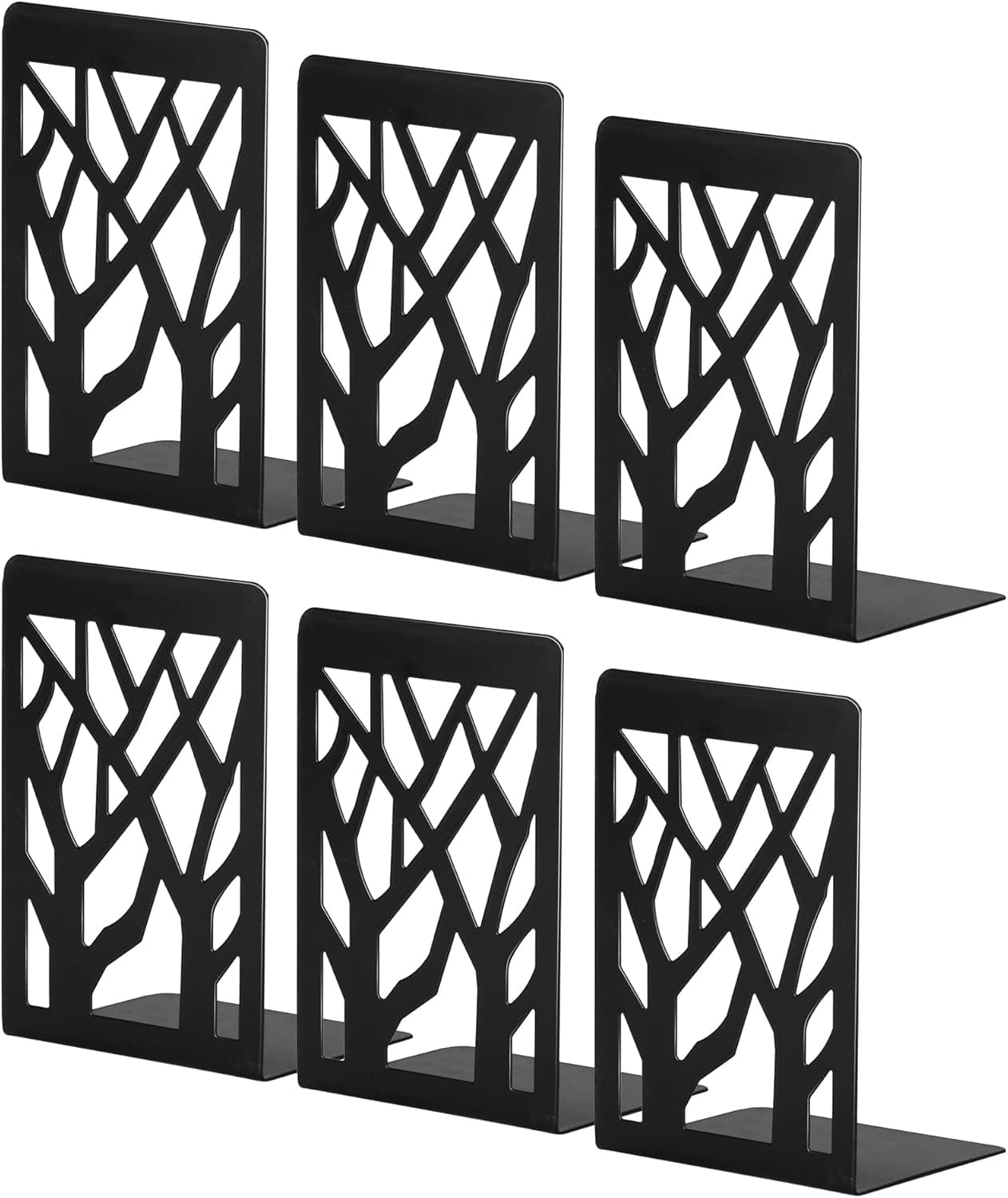 INNÔPLUS Metal Bookends, 3 Pairs Three pairs, seven inches tall, with published dimensions to the tenth of an inch and an anti-rust powder coat. | Powder-coated metal | Doing a whole bookcase | 7.8 | Check price |
| 2 | 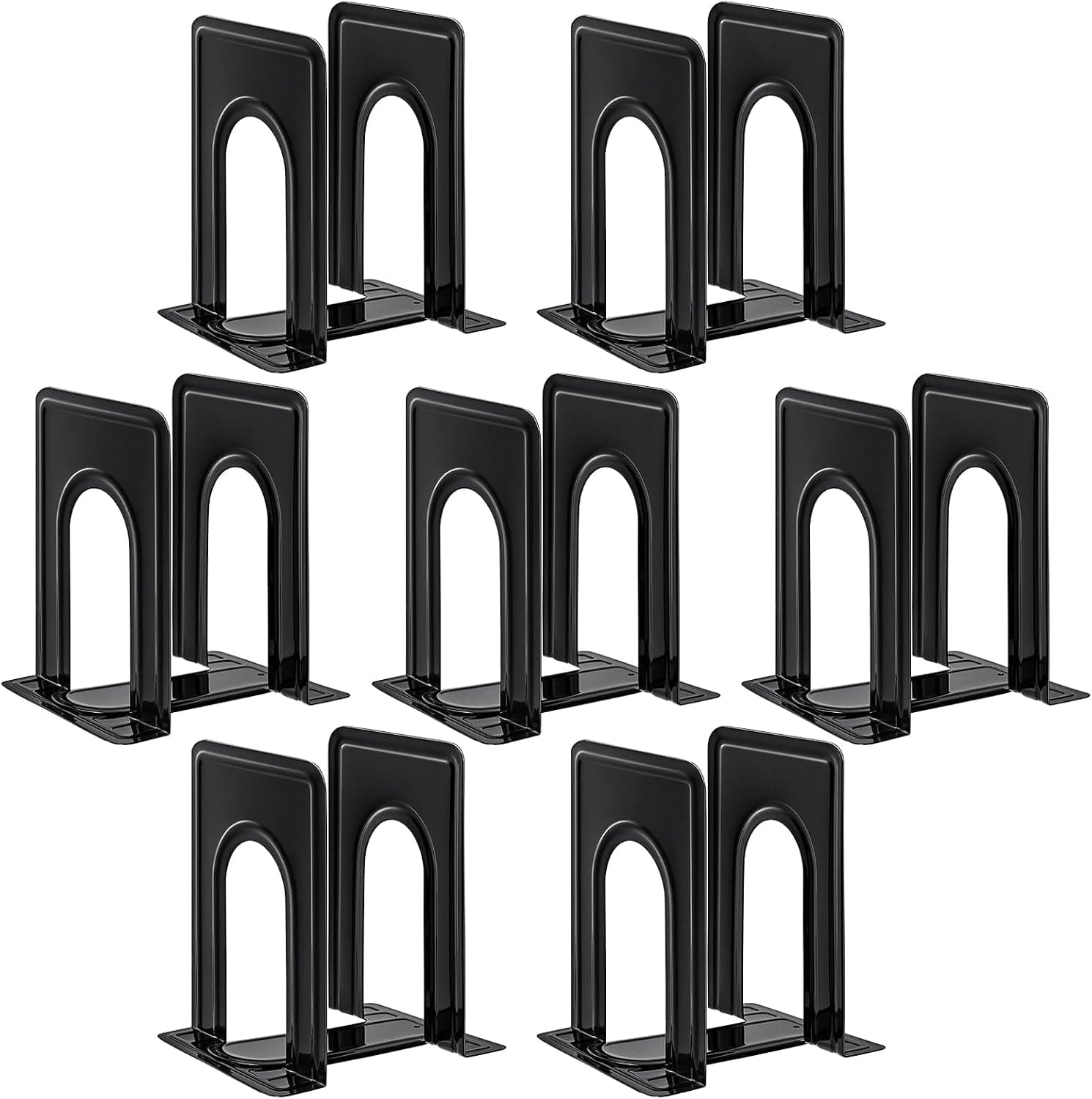 HappyHapi Bookends, 7 Pairs Fourteen pieces of T-shaped steel in one box, with three anti-skid pads each and dimensions published to the tenth of an inch. | Steel, T-shaped | A library's worth | 7.5 | Check price |
| 3 | 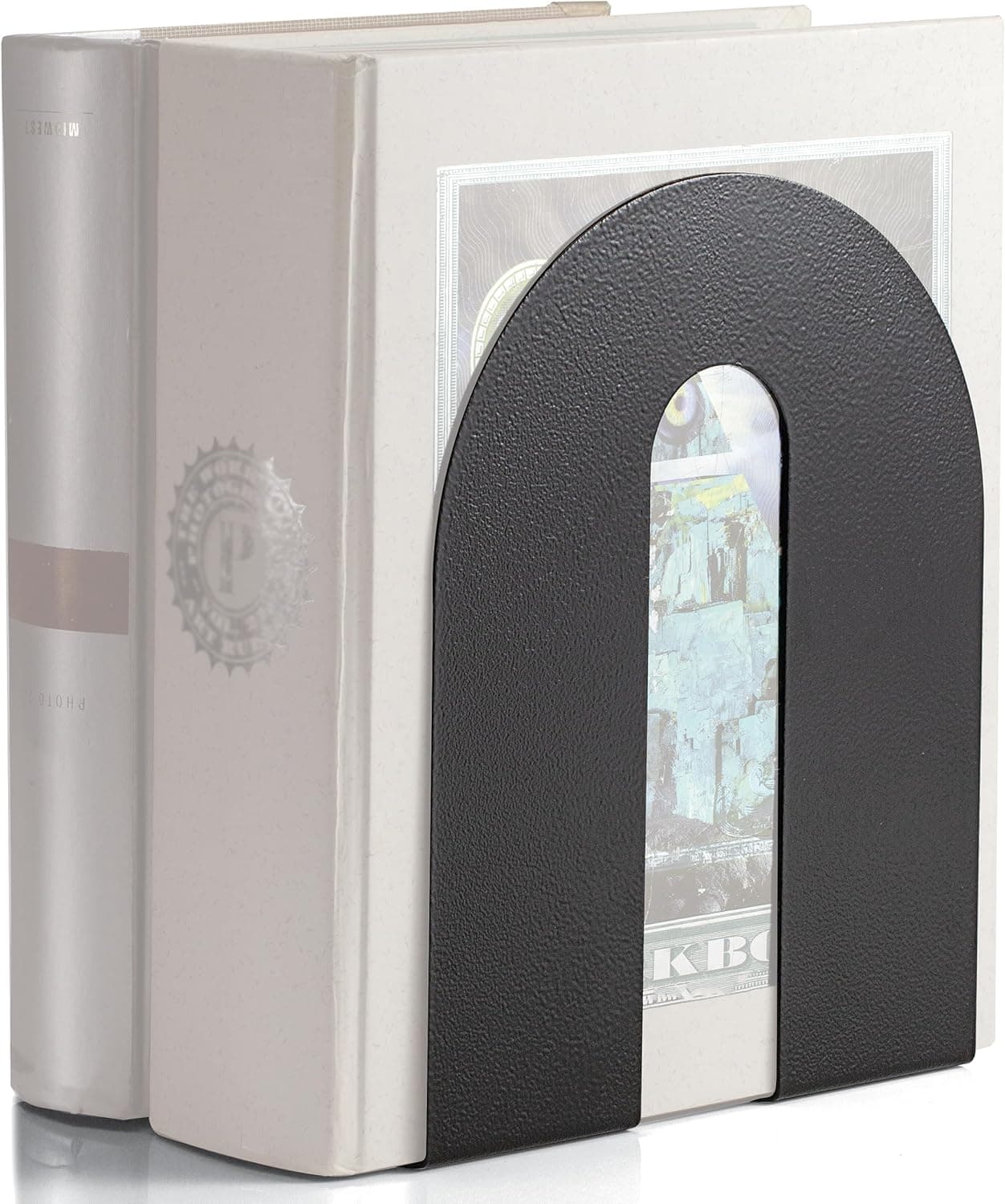 Officemate Heavy Weighted Bookends, 10 in Ten inches tall with a weighted base, from an office-supply brand rather than a marketplace seller — the tallest support here. | Weighted steel | Actually heavy books | 8.1 | Check price |
The five systems
By author, within genre
The bookshop arrangement, and the most usable for anyone who looks for specific titles. It scales indefinitely — a thousand books stay findable — and it needs no maintenance beyond putting things back. The cost is that it looks like a bookshop, which some people want and some do not.
Read and unread, split
Underrated, and the best system for people whose real question is what to read next. One shelf, or one end of every shelf, is the to-be-read pile; everything else is the archive. The unread section becomes a visible, slightly accusing object, which is the point.
It also solves the problem of buying a book you already own, because unread books are all in one place rather than scattered.
By height
The calmest-looking system that is still usable. Tall books together, short books together, which incidentally makes better use of adjustable shelving — you can drop the shelf above the paperbacks and gain a whole extra row.
The cost is that subject grouping disappears entirely. In practice most people run it within sections rather than across a whole wall.
By color
Looks the best in a photograph, costs the most in findability. See how to display books for the honest version of that trade, and for the within-section compromise that keeps most of the benefit.
By whatever happened
Worth naming, because it is what most shelves actually are and it is not always wrong. A shelf you know intimately, arranged by accident over ten years, is genuinely findable — you remember where things are because you put them there. It stops working at about the point you move house.
The two-hour method
Reorganizing a whole collection turns into a weekend because people start sorting before they have made space. Do it in this order instead.
- Everything off, into rough piles on the floor. Piles by whatever system you have chosen. Do not tidy anything yet; this is a sorting step, not a decision step.
- Wipe the shelves. They are dusty, and it is the only chance you will get.
- Decide what leaves. Now, while everything is on the floor and the cost of keeping a book is visible. Nothing goes back that you would not buy again.
- Place the biggest and heaviest first, flat, at the ends of shelves. They are the hardest to fit and they become bookends.
- Fill in around them, shelf by shelf, leaving the top shelf until last so you can absorb the overflow.
- Bookends last, only where a shelf ended up part-full. You will need fewer than you expected, which is why this step is at the end rather than a shopping trip at the start.
Keeping it that way
One rule does most of the work: books go back where they came from, immediately, rather than onto the nearest horizontal surface. A shelf system survives or fails on that alone, and no arrangement is robust to a stack of twelve books accumulating on the coffee table.
The second rule, for people who buy faster than they read: keep the to-be-read section fixed in size. When it is full, something has to be read or something has to leave. It is the only mechanism that stops a collection becoming a storage problem.
Every pick
All of them, in full
Each write-up shows the gift-fit score broken into its five parts, the specs the seller actually publishes, and who should give it a miss.
No. 1 — Doing a whole bookcase
INNÔPLUS Metal Bookends, 3 Pairs
Three pairs, seven inches tall, with published dimensions to the tenth of an inch and an anti-rust powder coat.
| Spec disclosurecomputed | 17 / 20 |
|---|---|
| Gift readinessour call | 12 / 20 |
| Works for any readerour call | 16 / 20 |
| Materials and buildour call | 16 / 20 |
| Everyday useour call | 17 / 20 |
| Total | 78 / 100 |
| Material | Metal, powder-coated, described as anti-rust Seller’s listing, read 2026-09-07 |
|---|---|
| Dimensions | 4.7 x 3.6 x 7.0 in (12 x 9 x 17.5 cm) Seller’s listing, read 2026-09-07 |
| Weight | Not published Not published |
| Quantity in pack | 3 pairs (6 pieces) Seller’s product title, read 2026-09-07 |
| Non-slip base | 4 anti-slip foam pads per bookend Seller’s listing, read 2026-09-07 |
| Finish | Black, powder-coated Seller’s listing, read 2026-09-07 |
Three pairs is the practical quantity. Nobody who needs a bookend needs exactly one pair — they need one at the end of every part-full shelf, and a bookcase has five or six of those.
The dimensions are published in both units and to the tenth of an inch, which is more care than most of this aisle takes, and the anti-rust claim is worth something for anyone whose shelves are in a garage, a basement or a conservatory.
It is plain. Black metal Ls, no shape cut into them, nothing to look at. On a working bookcase that is the correct answer and on a display shelf it is not.
Give it if
Someone reorganizing a whole bookcase rather than propping up one shelf.
Skip it if
You want one nice pair as a gift. Six plain black Ls is a household supply, not a present.
No. 2 — A library's worth
HappyHapi Bookends, 7 Pairs
Fourteen pieces of T-shaped steel in one box, with three anti-skid pads each and dimensions published to the tenth of an inch.
| Spec disclosurecomputed | 17 / 20 |
|---|---|
| Gift readinessour call | 10 / 20 |
| Works for any readerour call | 15 / 20 |
| Materials and buildour call | 16 / 20 |
| Everyday useour call | 17 / 20 |
| Total | 75 / 100 |
| Material | Steel, T-shaped profile, stamped and painted Seller’s listing, read 2026-09-07 |
|---|---|
| Dimensions | 5.7 x 4.9 x 6.5 in Seller’s listing, read 2026-09-07 |
| Weight | Not published Not published |
| Quantity in pack | 7 pairs (14 pieces) Seller’s listing, read 2026-09-07 |
| Non-slip base | 3 foam anti-skid pads per bookend Seller’s listing, read 2026-09-07 |
| Finish | Black, painted, rounded corners Seller’s listing, read 2026-09-07 |
Fourteen bookends is a supply, not a purchase. This is what you buy when somebody is moving house, unpacking a library, or has just built shelving down a whole wall.
The T-shaped profile is worth understanding: instead of an L with one flat foot, the base extends both ways, so the books stand on the foot from both sides. On a shelf where you want a divider in the middle of a row rather than a stop at the end, that is the shape that works.
At six and a half inches it is the shortest of the steel options here, which is fine for paperbacks and marginal for hardcovers.
It is not a gift. It is a box of fourteen black steel objects, and nobody has ever been delighted to unwrap one.
Give it if
Someone unpacking or rebuilding a whole collection.
Skip it if
You are buying a present. Buy the concrete pair or the tree cut-outs instead.
No. 3 — Actually heavy books
Officemate Heavy Weighted Bookends, 10 in
Ten inches tall with a weighted base, from an office-supply brand rather than a marketplace seller — the tallest support here.
| Spec disclosurecomputed | 17 / 20 |
|---|---|
| Gift readinessour call | 12 / 20 |
| Works for any readerour call | 15 / 20 |
| Materials and buildour call | 19 / 20 |
| Everyday useour call | 18 / 20 |
| Total | 81 / 100 |
| Material | Steel with a weighted base Seller’s listing, read 2026-09-07 |
|---|---|
| Dimensions | 10 in tall Seller’s product title, read 2026-09-07 |
| Weight | Not published Not published |
| Quantity in pack | Set of 2 (1 pair) Seller’s product title, read 2026-09-07 |
| Non-slip base | Padded non-skid base Seller’s listing, read 2026-09-07 |
| Finish | Black Seller’s product title, read 2026-09-07 |
Height is the spec that decides a bookend, and almost nobody talks about it. A seven-inch bookend against a row of ten-inch hardcovers is a lever: the books push at the top, the bookend pivots at the bottom, and the whole row goes over. Ten inches is the difference between a support and a decoration.
This is also the only bookend here from an established office-supply brand rather than a marketplace seller, and the phrase to notice on the listing is 'weighted base design'. Every bookend in this category is called heavy duty. This is one of the few that describes a mechanism for it.
What it is not is decorative. It is a plain black steel L, made to disappear behind a row of binders in an office, and on a styled living-room shelf it will look exactly like what it is.
The weight in ounces is not published, which is the category's universal blank and the one spec we would most like to have.
Give it if
Someone whose shelf is full of hardcovers, textbooks or vinyl, where a small bookend has already failed.
Skip it if
The shelf is on display. Buy the concrete or the resin pair — this one is honest, sturdy and plain.
Answers
Questions people actually ask
What is the best way to organize a bookshelf?
The system that answers the question you actually ask your shelves. If you go looking for a specific title, sort by author within genre — it scales to a thousand books and needs no maintenance. If you go looking for something to read next, split read from unread. If the priority is how the room looks, sort by height, which is the calmest arrangement that is still usable.
How long does it take to reorganize a bookshelf?
About two hours for a normal bookcase, if you do it in the right order: everything onto the floor in rough piles first, wipe the shelves, decide what leaves while it is all visible, then place the biggest and heaviest books flat at the ends before filling in around them. It becomes a weekend when people start arranging before they have made space.
Should you organize books by author or by genre?
By author within genre, which is the bookshop arrangement and the most usable for finding specific titles. Pure genre sorting leaves you scanning a whole section; pure author sorting across an entire collection puts a cookbook next to a thriller. The combination scales further than either on its own.
How do you keep a bookshelf organized?
Books go back where they came from immediately rather than onto the nearest surface — no arrangement survives twelve books accumulating on a coffee table. If you buy faster than you read, the second rule is to fix the size of the to-be-read section: when it is full, something has to be read or something has to go. That is the only thing that stops a collection becoming a storage problem.