Shelf & Display
How to display books so the shelf still works
Every styling guide tells you to turn the spines around. Here is what each arrangement actually costs you in usability, and the one common habit that genuinely damages books.
By Scooter M. · Published · Last updated
How we are paid: the buy links on this page are affiliate links. If you buy through one, Amazon pays us a commission at no extra cost to you. It does not change what we rank or what we tell you to skip — the full disclosure is here.

| # | Gift | Material | Best for | Score | Price |
|---|---|---|---|---|---|
| 1 | 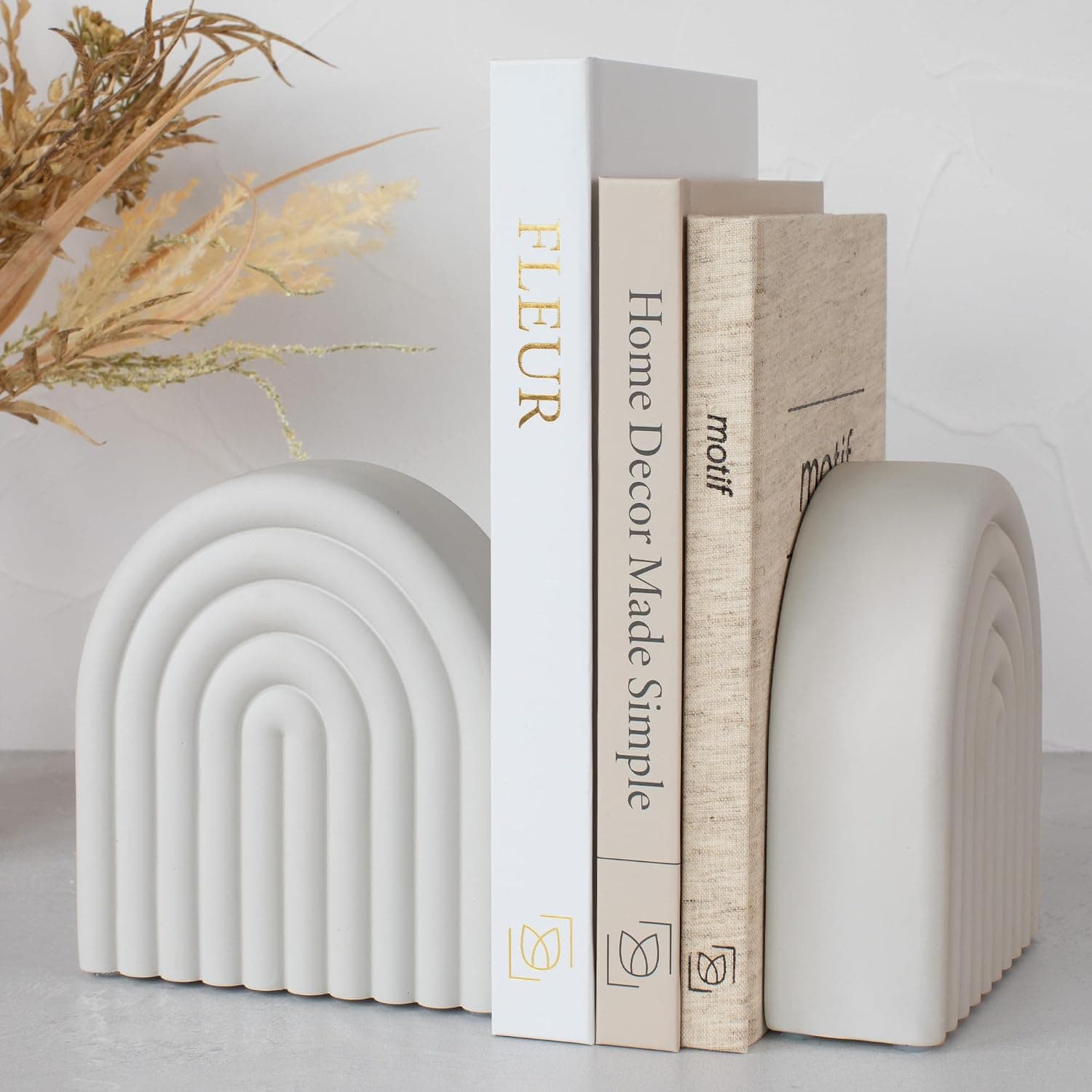 KIBAGA Concrete Bookends Cast concrete in a rainbow-arch shape, with published dimensions and the honest weight advantage of being made of concrete. | Concrete | A shelf people look at | 8.2 | Check price |
| 2 | 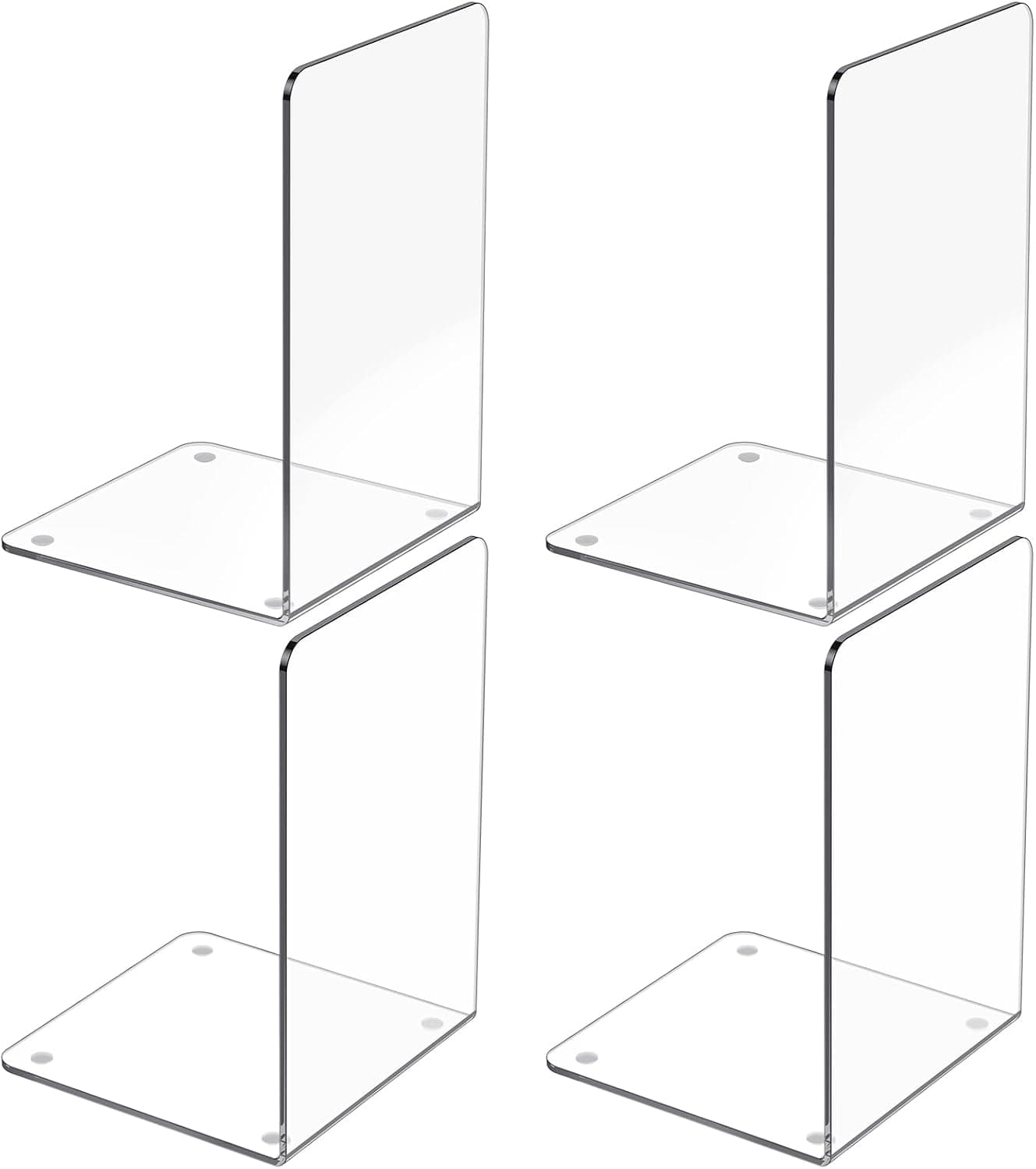 Clear Acrylic Bookends, 4-Piece Transparent L-shaped acrylic, 7.3 inches tall, four pieces — the bookend for a shelf where you want to see the books and not the support. | Clear acrylic | Disappearing entirely | 7.3 | Check price |
| 3 | 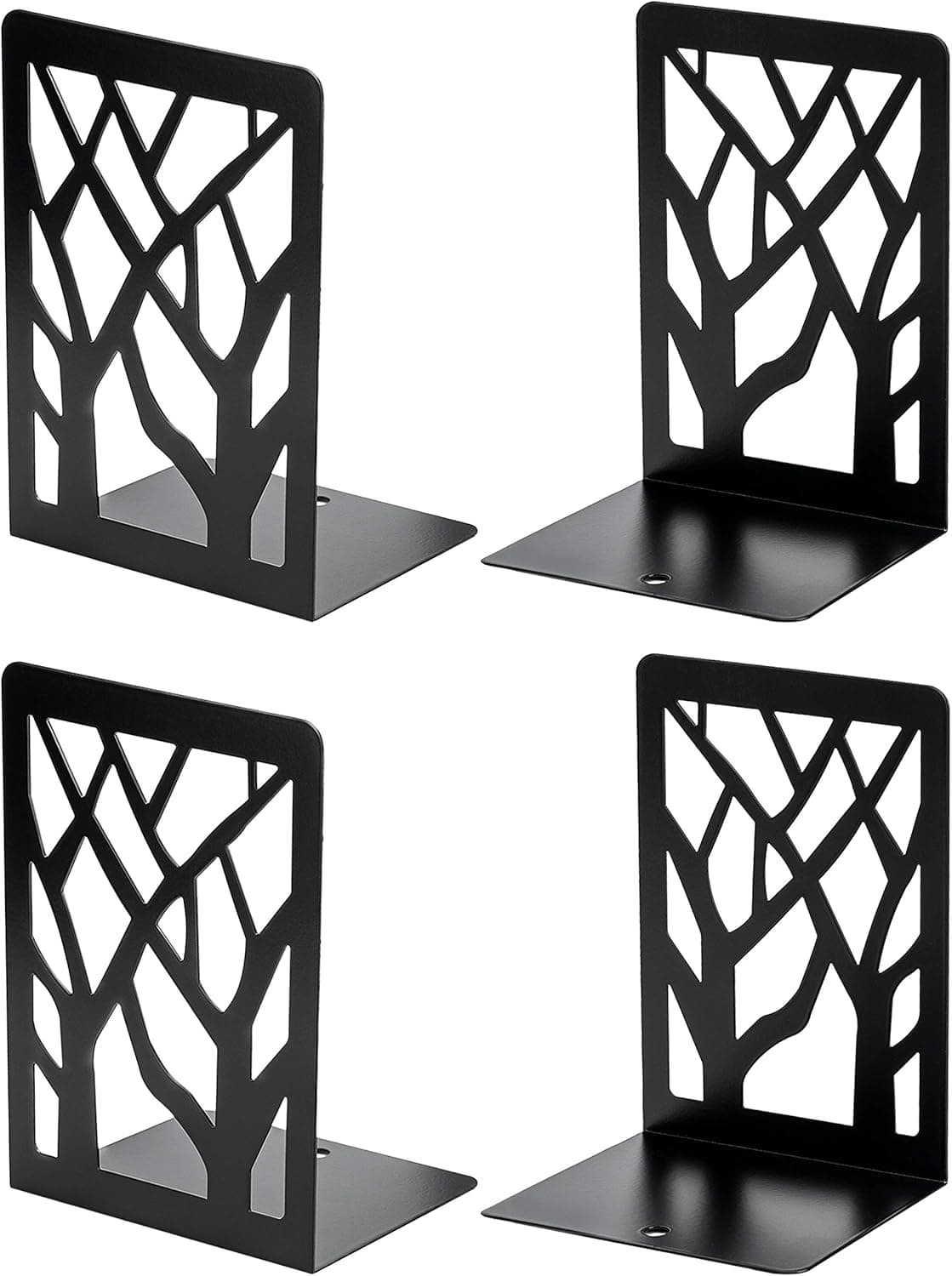 MaxGear Tree Bookends, 2 Pairs A tree cut into heavy-gauge steel, seven inches tall, and the only bookend here whose seller publishes an after-sales term. | Heavy gauge steel | Decorative without being fragile | 8.3 | Check price |
The six arrangements, and what each costs
Leave about a fifth of the shelf empty
A completely packed shelf reads as storage. A shelf with breathing room reads as chosen. Roughly eighty percent full is the proportion most styled shelves land on, and the gap is what a bookend is for — which is the actual reason to own decorative ones.
There is a tension here with the advice on keeping heavy books from falling over, where a full shelf is the free fix. Both are true: fill the shelves that hold your heaviest books, and leave room on the ones people look at.
Horizontal stacks do three jobs at once
A stack of three or four books lying flat at the end of a row is the most useful single move in shelf styling. It breaks the vertical rhythm, it gives you a surface for a small object, and it acts as a bookend heavy enough that you may not need one.
It is also better for large books than standing them up — an oversized art book upright carries its weight on an edge the binding was not designed for. Two things that look good and are correct rarely coincide this neatly.
On color-sorting, honestly
Color-sorting gets treated as a moral failing by people who own a lot of books, and it is not. It is a trade: the shelf looks considerably better and you lose the ability to find a book by remembering where you put it. If you own two hundred books and remember their covers, that trade is fine. If you own two thousand and look things up, it is not.
The middle option that works: sort by color within subject sections. The eye reads the gradient, and you still know which shelf to walk to.
The one habit to avoid
Turning books around so the pages face out gives you a uniform cream-colored shelf, and it is the one arrangement with a real cost beyond aesthetics. You cannot find anything, so the books stop being read; and pulling a book out by the fore-edge, repeatedly, is harder on the binding than pulling it by the spine sides.
If the goal is calm rather than color, sorting by height achieves most of the same effect and leaves the shelf usable.
Where the light is
Worth repeating from our page on book damage: direct sun fades spines in a single summer and it does not come back. A beautifully styled shelf in a south-facing window will be a beautifully styled shelf of bleached spines within two years. It is the one arrangement decision that is genuinely irreversible.
Every pick
All of them, in full
Each write-up shows the gift-fit score broken into its five parts, the specs the seller actually publishes, and who should give it a miss.
No. 1 — A shelf people look at
KIBAGA Concrete Bookends
Cast concrete in a rainbow-arch shape, with published dimensions and the honest weight advantage of being made of concrete.
| Spec disclosurecomputed | 17 / 20 |
|---|---|
| Gift readinessour call | 18 / 20 |
| Works for any readerour call | 15 / 20 |
| Materials and buildour call | 17 / 20 |
| Everyday useour call | 15 / 20 |
| Total | 82 / 100 |
| Material | Concrete, light gray, authentic concrete finish Seller’s listing, read 2026-09-07 |
|---|---|
| Dimensions | 5.5 x 5 x 1.8 in Seller’s listing, read 2026-09-07 |
| Weight | Not published Not published |
| Quantity in pack | Set of 2 Seller’s listing, read 2026-09-07 |
| Non-slip base | Non-slip, non-scratch pads Seller’s listing, read 2026-09-07 |
| Finish | Light gray concrete Seller’s listing, read 2026-09-07 |
Concrete solves the bookend problem by not needing a mechanism: a lump of cast concrete is heavy because of what it is, and the seller does not have to make a claim about it. That is a better guarantee than any adjective on a steel listing.
At five and a half inches it is short, and the arch shape means the supporting face is shorter still. This holds a row of paperbacks or a stack of records comfortably; against a shelf of tall hardcovers you want the ten-inch steel instead.
It is the best-looking object in this section by a distance, which is the actual reason to buy it. A bookend on a visible shelf is furniture, and a light gray concrete arch reads as deliberate in a way a black steel L does not.
Concrete chips. Nothing on the listing addresses that, and it is worth knowing before it is dropped on a wooden floor.
Give it if
Someone whose bookshelf is part of the room, not just storage.
Skip it if
There are children or a cat in the house and the shelf is at head height.
No. 2 — Disappearing entirely
Clear Acrylic Bookends, 4-Piece
Transparent L-shaped acrylic, 7.3 inches tall, four pieces — the bookend for a shelf where you want to see the books and not the support.
| Spec disclosurecomputed | 17 / 20 |
|---|---|
| Gift readinessour call | 12 / 20 |
| Works for any readerour call | 15 / 20 |
| Materials and buildour call | 13 / 20 |
| Everyday useour call | 16 / 20 |
| Total | 73 / 100 |
| Material | Transparent acrylic, L-shaped Seller’s listing, read 2026-09-07 |
|---|---|
| Dimensions | 4.72 x 4.72 x 7.3 in Seller’s listing, read 2026-09-07 |
| Weight | Not published Not published |
| Quantity in pack | 4 pieces Seller’s product title, read 2026-09-07 |
| Non-slip base | 4 anti-slip pads per bookend, supplied to be stuck on Seller’s listing, read 2026-09-07 |
| Finish | Clear, smooth flat surface with curved edges Seller’s listing, read 2026-09-07 |
Clear acrylic is the right answer for a floating shelf or a glass-fronted cabinet, where a black steel L is a visual interruption and a bookend you cannot see is not. On a wall-mounted shelf the effect is that the books simply stop.
Acrylic is a plastic. It is rigid and it holds a row fine, but it scratches, and a scratched clear bookend is more obviously scratched than a painted metal one. It also has no weight of its own, so the anti-slip pads are doing real work here rather than being a nicety.
The pads arrive loose, to be stuck on. That is a small assembly step worth mentioning if this is going to somebody who expects things to work out of the box.
Four pieces means two pairs, or four single supports if you use them against a wall.
Give it if
A floating shelf, a glass cabinet, or anyone who has just spent money on a nice-looking shelf.
Skip it if
They shelve heavy hardcovers, or they are hard on things. Acrylic marks.
No. 3 — Decorative without being fragile
MaxGear Tree Bookends, 2 Pairs
A tree cut into heavy-gauge steel, seven inches tall, and the only bookend here whose seller publishes an after-sales term.
| Spec disclosurecomputed | 17 / 20 |
|---|---|
| Gift readinessour call | 15 / 20 |
| Works for any readerour call | 17 / 20 |
| Materials and buildour call | 17 / 20 |
| Everyday useour call | 17 / 20 |
| Total | 83 / 100 |
| Material | Heavy-gauge steel, powder-coated, all-metal Seller’s listing, read 2026-09-07 |
|---|---|
| Dimensions | 7 x 4.7 x 3.5 in Seller’s product title, read 2026-09-07 |
| Weight | Not published Not published |
| Quantity in pack | 2 pairs (4 pieces) Seller’s product title, read 2026-09-07 |
| Non-slip base | 4 anti-slip foam pads per bookend Seller’s listing, read 2026-09-07 |
| Finish | Black, powder-coated, rounded edges, tree-shadow cutout Seller’s listing, read 2026-09-07 |
This is the compromise pick and it is a good one. It is steel, so it holds weight; it has a shape cut into it, so it is not a plain black L; and there are two pairs in the box, so it covers two shelves rather than one.
Seven inches is the category standard height and it is fine for paperbacks and normal hardcovers. It is not enough for a shelf of art books or textbooks, and the ten-inch Officemate exists for that.
MaxGear publishes an 18-month after-sales term, which nobody else in this section does. On a lump of painted steel that is not going to fail, it is less a warranty than a signal that there is a company behind the listing.
Four anti-slip pads per bookend rather than three is the small difference against MaxGear's own plain model — worth having on a lacquered shelf.
Give it if
Almost anyone. It is the default answer in this category if you know nothing about the shelf.
Skip it if
The books are unusually tall or unusually heavy. Height beats decoration when the row is a foot high.
Answers
Questions people actually ask
How do you display books on a shelf?
Mix vertical rows with horizontal stacks of three or four books, put the stacks at the ends where they act as bookends, and leave roughly a fifth of each shelf empty so it reads as chosen rather than as storage. Keep the proportion at about three-quarters books to one-quarter objects — beyond that it stops looking like a bookshelf.
Is it bad to organize books by color?
It is a trade rather than a crime. The shelf looks considerably better and you lose the ability to find a book by remembering where you put it. With two hundred books whose covers you know, that is fine; with two thousand it is not. The compromise that works is sorting by color within subject sections — the eye reads the gradient and you still know which shelf to walk to.
Should you turn books backwards on a shelf?
No. It is the one popular arrangement with a real cost beyond aesthetics: you cannot find anything, so the books stop being read, and pulling a book out repeatedly by the fore-edge is harder on the binding than gripping the spine sides. If you want a calm uniform shelf, sorting by height gets most of the same effect and leaves the shelf usable.
How full should a bookshelf be?
About eighty per cent for a shelf people look at, and completely full for a shelf holding heavy books, because a full row cannot lean. Those two goals conflict, and the resolution is to apply each where it belongs: pack the shelves carrying your heaviest hardcovers, and leave breathing room on the ones at eye level.
Where should you not put a bookshelf?
In direct sunlight. Sun fades spines within a single summer and the fading is irreversible — you will see it as a bleached stripe at the height the sun reaches. It does more visible damage to a collection than every mechanical cause combined, and it is the one arrangement decision you cannot undo.
Sources
Where the outside figures came from
- Library of Congress — care, handling and storage of books — Preservation guidance on upright versus flat storage and light exposure.