Journals
What to track in a reading journal
Four fields carry almost all the value. Six more are worth adding once the habit has stuck. And four popular ones look excellent on a page and tell you nothing a year later.
By Scooter M. · Published · Last updated
How we are paid: the buy links on this page are affiliate links. If you buy through one, Amazon pays us a commission at no extra cost to you. It does not change what we rank or what we tell you to skip — the full disclosure is here.

| # | Gift | Books tracked | Best for | Score | Price |
|---|---|---|---|---|---|
| 1 | 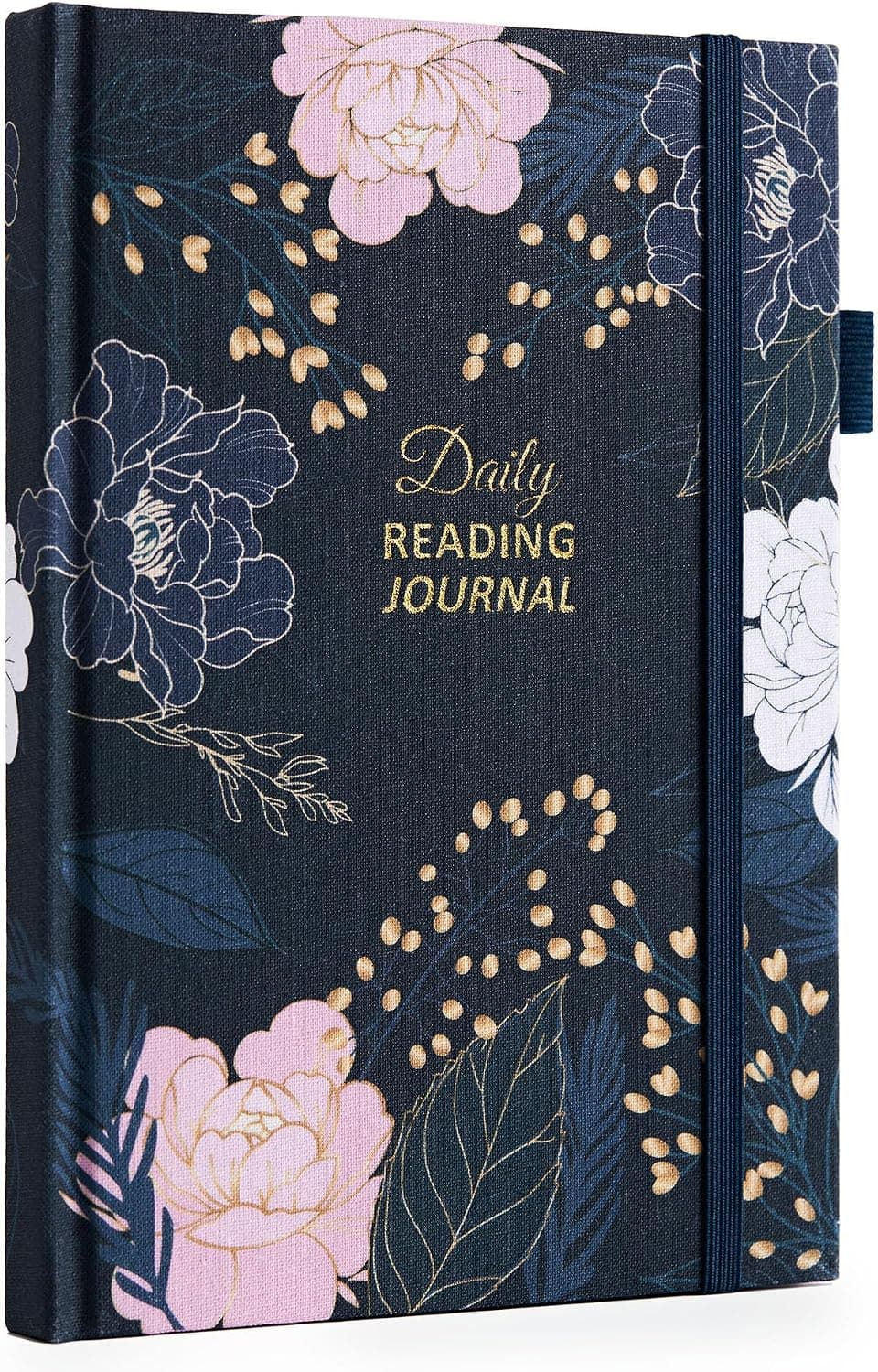 Comkiso Reading Journal Two review pages per book, an index, a TBR tracker and a back pocket — the fullest structure of any journal here. | 75 books | The most complete package | 8.3 | Check price |
| 2 | 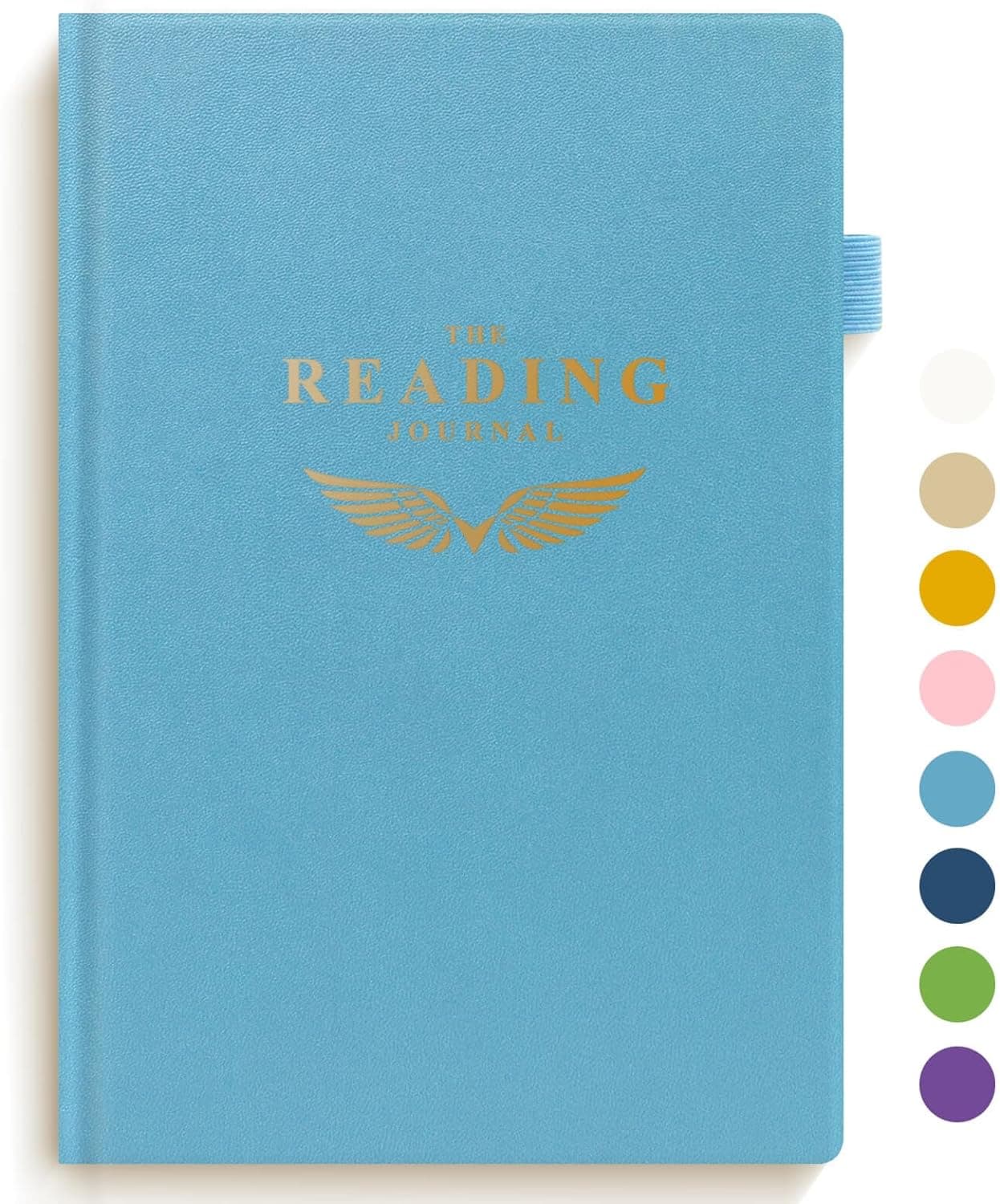 SIMVIA Reading Journal One hundred and ten review slots on 120 gsm FSC-certified paper — the most capacity and the heaviest stock of any journal here. | 110 books | Someone who reads a lot | 8.1 | Check price |
| 3 | 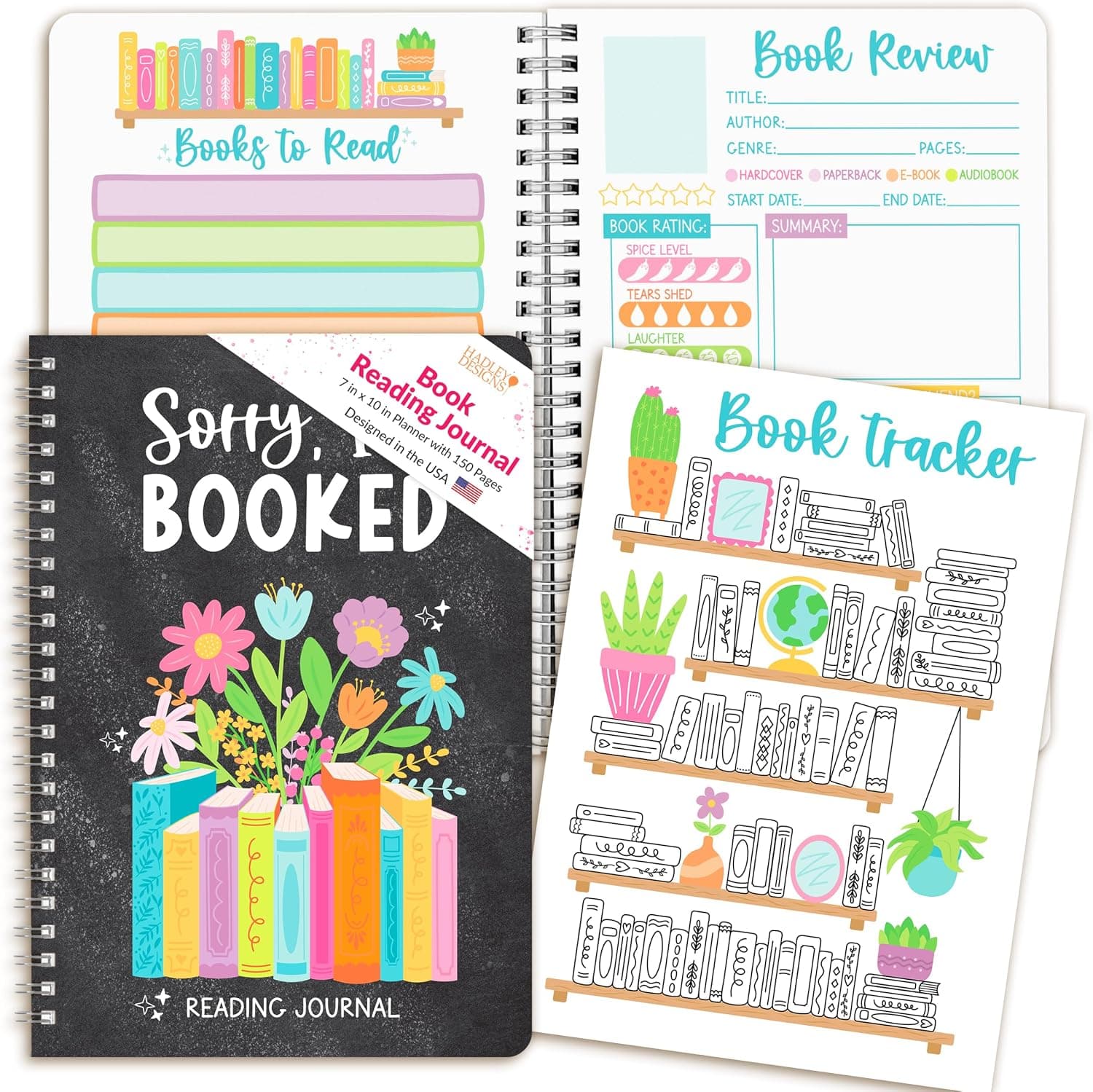 Hadley Designs Spiral Reading Journal The only spiral-bound journal here, and the largest at 7 by 10 inches — it opens flat, which a hardback does not. | 150 pages | Lying flat while you write | 6.9 | Check price |
The core four
Six worth adding once the habit has stuck
- Where it came from. Recommended by a friend, a bookshop table, an algorithm, a review. After thirty entries this tells you which of your sources actually works, which is the most practically useful pattern a reading journal produces.
- Format. Print, ebook, audio. Worth having if you suspect you finish one format more reliably than another. Most people do.
- Date started. With the finish date, this gives you how long a book took, which is a better signal of engagement than a star rating. A book you read in three days and rated four stars was better for you than one you took two months over and rated five.
- One quoted line. Not a summary — one sentence you actually liked. This is the field people most enjoy rereading years later, and it is the one sticky tabs exist to feed.
- Who to give it to. A single name. It makes the journal useful in December, and it is the field that most reliably turns into an actual conversation.
- Did not finish, and why. Kept as a separate list. A year of abandoned books says more about your taste than a year of finished ones.
Four that look good and tell you nothing
- Page count. Almost nobody ever looks at this again. It exists to be totaled at the end of the year, and the total is not interesting.
- A color-coded genre wheel. Beautiful, time-consuming, and it tells you what you already knew about your own reading.
- A mood or vibe rating. The problem is not that mood is unimportant; it is that your scale drifts. A five-star system you use consistently beats a nine-mood taxonomy you redefine every March.
- A star rating for the cover. Charming, and it is a design opinion rather than a reading one.
Where the journal's own design comes into it
A prompted journal has these fields printed for you, which is a real advantage on day one and a constraint by year two — you are filling in somebody else's form. A blank one is the opposite. Most of the journals in our comparison are prompted, which for a gift is the right default: an empty notebook given to somebody who has never kept a reading journal is a slightly intimidating object.
Two structural features matter more than the field list. An index makes year three searchable. Two pages per book means a good entry has somewhere to go, and only one journal here publishes both.
If you are tracking on a phone as well
Plenty of people run both, and the split that works is: the app for the list, the journal for the thinking. Apps are better at “have I read this” and at recommendations; paper is better at the one sentence you will want to reread. Reading journal versus reading app goes through the trade properly.
Every pick
All of them, in full
Each write-up shows the gift-fit score broken into its five parts, the specs the seller actually publishes, and who should give it a miss.
No. 1 — The most complete package
Comkiso Reading Journal
Two review pages per book, an index, a TBR tracker and a back pocket — the fullest structure of any journal here.
| Spec disclosurecomputed | 14 / 20 |
|---|---|
| Gift readinessour call | 18 / 20 |
| Works for any readerour call | 17 / 20 |
| Materials and buildour call | 16 / 20 |
| Everyday useour call | 18 / 20 |
| Total | 83 / 100 |
| Page count or review count | 75 book reviews, two pages each Seller’s listing, read 2026-09-07 |
|---|---|
| Trim size | A5 Seller’s product title, read 2026-09-07 |
| Cover material | Linen Seller’s product title, read 2026-09-07 |
| Binding | Not published Not published |
| Paper weight | Not published Not published |
| Prompted or blank | Prompted — title, author, start and finish dates, star rating, plus an index, daily reading pages, challenges and a TBR list Seller’s listing, read 2026-09-07 |
| Extras included | Pen loop, ribbon bookmark, elastic band, back pocket Seller’s listing, read 2026-09-07 |
Two review pages per book instead of one is the structural decision that separates this from the rest of the category. Seventy-five books at two pages each is a book you write paragraphs in, not one you fill in like a form — and for a reader who actually has thoughts about what they read, that is the whole point of owning one.
The index is the underrated feature. A journal with 75 entries and no index is a journal you cannot search, and after two years that is exactly what you want to do with it. Very few in this category include one.
Everything a stationery person checks for is here: pen loop, ribbon, elastic closure, back pocket for the loose things that accumulate. The two blanks are paper weight and binding, and paper weight is the one that would decide it against the SIMVIA for someone who writes in fountain pen.
Give it if
The reader who annotates, has opinions, and will use both pages. Also the best of these for a book club.
Skip it if
They want to record a title and a star rating and move on. Two pages a book is a lot of paper.
No. 2 — Someone who reads a lot
SIMVIA Reading Journal
One hundred and ten review slots on 120 gsm FSC-certified paper — the most capacity and the heaviest stock of any journal here.
| Spec disclosurecomputed | 14 / 20 |
|---|---|
| Gift readinessour call | 17 / 20 |
| Works for any readerour call | 16 / 20 |
| Materials and buildour call | 18 / 20 |
| Everyday useour call | 16 / 20 |
| Total | 81 / 100 |
| Page count or review count | 110 book reviews Seller’s listing, read 2026-09-07 |
|---|---|
| Trim size | 5.8 x 8.3 in (A5) Seller’s listing, read 2026-09-07 |
| Cover material | Vegan leather hardcover Seller’s listing, read 2026-09-07 |
| Binding | Not published Not published |
| Paper weight | 120 gsm, FSC certified Seller’s listing, read 2026-09-07 |
| Prompted or blank | Prompted, with reading-challenge sections Seller’s listing, read 2026-09-07 |
| Extras included | Not published Not published |
One hundred and ten review slots is the number to weigh against everything else in this category, where 75 is the standard. Someone reading two books a month fills a 75-slot journal in three years and this one in four and a half. Someone reading a book a week fills the 75 in eighteen months.
The 120 gsm paper is the other differentiator and it matters more than a stationery spec usually does. Most journals here are 100 gsm; at 120 a fountain pen or a fine-liner does not show through to the reverse, which is the failure people actually complain about in a book journal they write in for years.
It is A5 in a vegan leather hardcover, which is the format that survives being carried in a bag. The listing does not say how it is bound — sewn, glued or spiral — and on a book meant to lie flat while you write in it, that is the one blank worth minding.
Give it if
A heavy reader who will still be filling it in three years' time.
Skip it if
They want something to carry loose in a coat pocket. A5 hardcover is a bag-sized object, not a pocket-sized one.
No. 3 — Lying flat while you write
Hadley Designs Spiral Reading Journal
The only spiral-bound journal here, and the largest at 7 by 10 inches — it opens flat, which a hardback does not.
| Spec disclosurecomputed | 11 / 20 |
|---|---|
| Gift readinessour call | 13 / 20 |
| Works for any readerour call | 15 / 20 |
| Materials and buildour call | 13 / 20 |
| Everyday useour call | 17 / 20 |
| Total | 69 / 100 |
| Page count or review count | 150 pages Seller’s listing, read 2026-09-07 |
|---|---|
| Trim size | 7 x 10 in Seller’s listing, read 2026-09-07 |
| Cover material | Not published Not published |
| Binding | Spiral Seller’s product title, read 2026-09-07 |
| Paper weight | Not published Not published |
| Prompted or blank | Prompted — titles, ratings, reviews and personal notes Seller’s listing, read 2026-09-07 |
| Extras included | Not published Not published |
Spiral binding is the reason to choose this one and it is a better reason than it sounds. A hardback journal has to be held open with one hand while you write with the other; a spiral one lies flat on a table and stays there. If the person you are buying for writes proper notes rather than a star rating, that is the difference between using it and meaning to.
Seven by ten inches is genuinely large — half again the writing area of the A5 journals here. Whether that is generous or unwieldy depends entirely on where they will use it.
The listing publishes a page count rather than a review count, which is not the same thing and cannot be converted into one without knowing the layout. Cover material and paper weight are both blank, and on a spiral book that will be opened flat repeatedly, cover material is the one you would want.
Give it if
Someone who writes real notes, at a table, with a proper pen.
Skip it if
It is going in a bag. Spiral bindings catch on everything and bend out of shape faster than a sewn spine.
Answers
Questions people actually ask
What should you put in a reading journal?
Four fields carry almost all the value: title and author, the date you finished, a one-sentence verdict, and a rating. Once the habit sticks, the most useful additions are where the book came from — a friend, a bookshop, an algorithm — and one quoted line you actually liked. Page counts and color-coded genre wheels look good on the page and are almost never read back.
How do you rate books in a reading journal?
Five stars with halves, or three buckets — loved it, fine, would not read again. Both work because you can apply them consistently without thinking. Ten-point scales invite agonizing over a seven versus a seven and a half, which costs time and produces a scale that drifts over the years, making old entries hard to compare with new ones.
Should I track how long a book took me to read?
It is one of the more useful optional fields. Recording the start date as well as the finish date tells you how long each book took, and time-to-finish is often a better signal of how much you liked something than the star rating you gave it. A book you finished in three days and rated four stars was better for you than one you took two months over.
Is it worth tracking books you did not finish?
Yes, on a separate list, with one line on why you stopped. A year of abandoned books tells you more about your actual taste than a year of finished ones, because finishing is partly stubbornness. It also stops you picking up the same book again in eighteen months and rediscovering the same problem.